

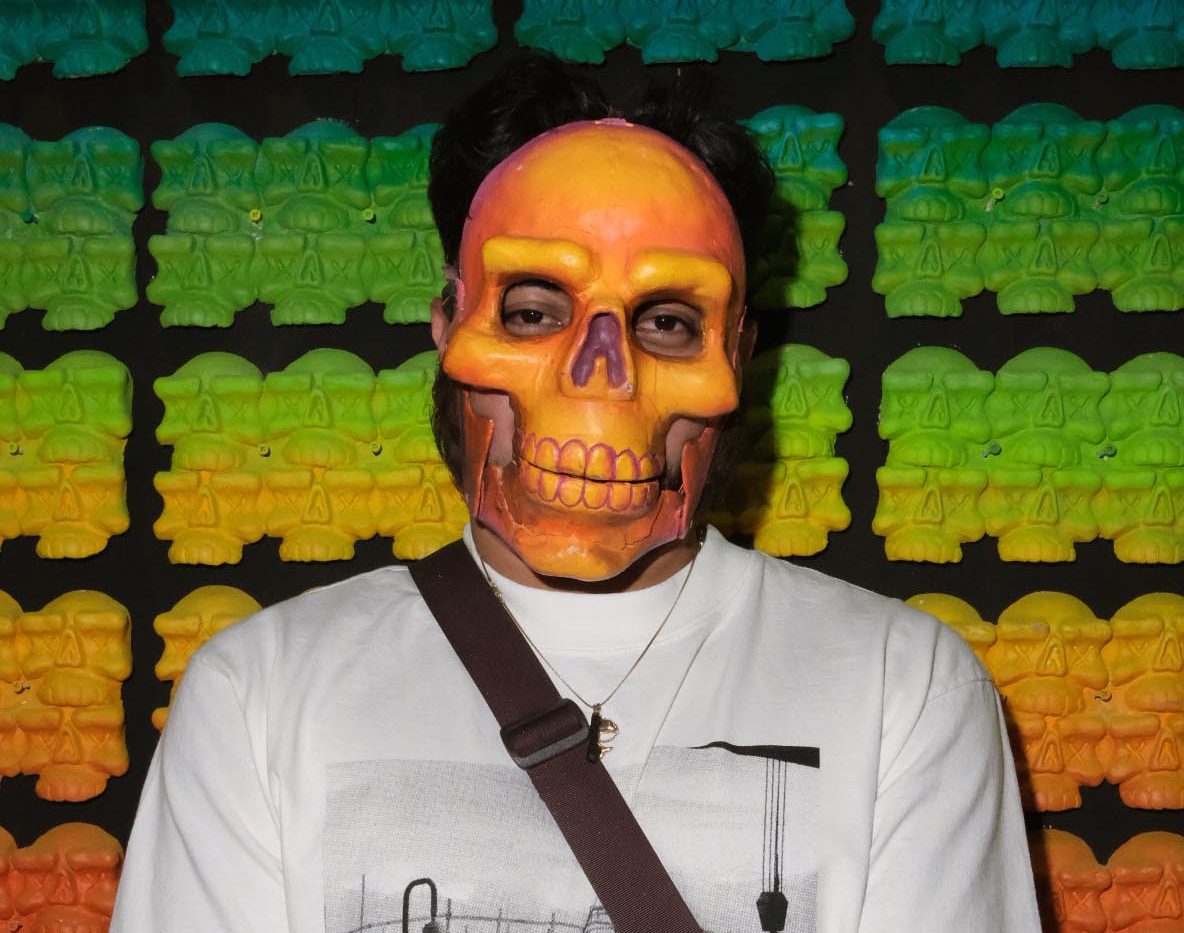
At a time when immigration dominates headlines and public discourse, Signs of the Times at the Museum of Graffiti gives the immigrant experience a bold, unflinching visual voice. In his first major solo exhibition, Miami-based artist Weerdo transforms reclaimed street signs, symbols of authority and control, into powerful testaments of migration, resistance, and identity. Born in Mexico City and raised in Florida, Weerdo draws on his own family’s journey from rural towns to the U.S. to create work that merges the urgency of graffiti with the depth of ancestral memory. Each piece stands as both a personal story and a collective call for visibility, challenging the narratives that too often marginalize immigrant communities.
The Museum of Graffiti is proud to present Signs of the Times, a solo exhibition by Miami-based artist Weerdo, opening this September. Known for his raw visual language and deep cultural roots, Weerdo brings together a new body of work that explores themes of migration, resistance, and Mexican identity through the lens of graffiti.
At the heart of Signs of the Times is a series of striking new pieces painted on reclaimed street signs, transforming everyday municipal objects into powerful declarations of self, heritage, and protest. These signs—once meant to control, warn, or guide—are reimagined by Weerdo as symbols of reclaiming public space and rewriting narratives.
The exhibition spans the arc of his career, featuring early work, new paintings, and a site-specific installation, along with mixed media pieces on canvas, paper, and found materials. In each work, Weerdo’s bold style-writing meets layered symbolism—feathers, skulls, snakes, and pyramids—invoking ancestral memory while confronting the realities of modern urban life.

This exhibition arrives at a critical moment in American life, where immigrants—particularly those of Mexican and Latin American descent—continue to be vilified by political rhetoric and misrepresented by mainstream media. Against this hostile backdrop, Signs of the Times is both an act of resistance and a call for visibility. Weerdo’s work affirms the power, complexity, and dignity of Mexican identity at a time when public narratives attempt to erase or criminalize it.
Museum of Graffiti curator Alan Ket explains, “Through his art, he offers a counter-story—one rooted in sacrifice, culture, and unrelenting presence. Hosting Weerdo and showcasing his art flips the government’s narrative on its head and reminds us of the great history of Mexico and its artists.”
Signs of the Times invites viewers to reflect on the sacrifices made in the pursuit of visibility and voice. By using the language of graffiti and the materials of the street, Weerdo builds a bridge between past and present, honoring his Mexican heritage while challenging the structures that marginalize it.
ARTIST BIO: WEERDO
Weerdo is a Miami-based graffiti artist born in Mexico City in 1994 and raised in Homestead, Florida. His roots trace back to Puebla and Querétaro, where his family migrated from rural towns to the city center of Copilco el Bajo. Raised in a working-class household, Weerdo first began drawing in 1997 while spending time at a local park in Florida City, where his parents sold chips and refreshments to make ends meet. From an early age, art became a tool of survival, rebellion, and self-definition.
Influenced by the punk and hip-hop cultures that shaped his youth, Weerdo came of age studying the graffiti of Miami crews like STV, WH, and LTW. He began tagging in high school and soon developed a bold, confrontational style rooted in traditional style writing and shaped by his Mexican heritage.

Central to his work is his signature skull, inspired by the Aztec tzompantli—a ceremonial rack of skulls used to honor war sacrifices. Each skull Weerdo paints represents a personal sacrifice in the name of art and visibility. “If you had to count all of your sacrifices,” he asks, “how many skulls would you have?” His graffiti often incorporates snakes, feathers, pyramids, and other Mesoamerican symbols, merging ancient iconography with contemporary street culture.
Primarily working in spray paint, Weerdo also reclaims public space through interventions on street signs—particularly tow-away signs—as a form of artistic protest and personal retribution. “Signs provide direction, but adding my work gives new meaning to knowing your streets,” he says.
Weerdo’s work is inspired by his indigenous lineage, his American experience, and the creative energy of artists who make something out of nothing. Drawing from the visual language of ancient civilizations and the grit of modern-day resistance, his art speaks without words—preserving stories, culture, and identity in every letter, tag, and skull.













Leave a Reply